
- Indoor air
- does air purifier remove dust
- best air purifier for dust
- air purifier for dust in home
- air purifier for dust
Air Purifier for Dust: What It Catches and How to Choose
Does an air purifier remove dust? See what it catches, what it can't, and what to look for: a washable pre-filter, HEPA H13, CADR and a filter alert.

Khushboo Soni
8 min read · 23 Nov 2026

Air purifier for dust: what it catches, what it can't, and how to choose one
You wipe the TV unit in the morning. By evening there's a grey film on it again, and the black screen shows every speck. You're not imagining it. Dust never really leaves a room. It just keeps settling and lifting. The short answer: an air purifier for dust traps the dust floating in your room before it settles. A pre-filter catches the big bits and a HEPA H13 filter catches the fine dust you can't see. It can't clean dust that has already landed, so it works best alongside a damp cloth and a mop.
Quick answer: what an air purifier for dust needs
- A washable pre-filter for hair, lint and coarse dust
- A HEPA H13 filter for fine dust and PM2.5
- Enough CADR to refresh your room at least 4 times an hour
- A PM2.5 sensor with auto mode, so it speeds up when you sweep
- A clear sign when the filters need changing
Does an air purifier remove dust?
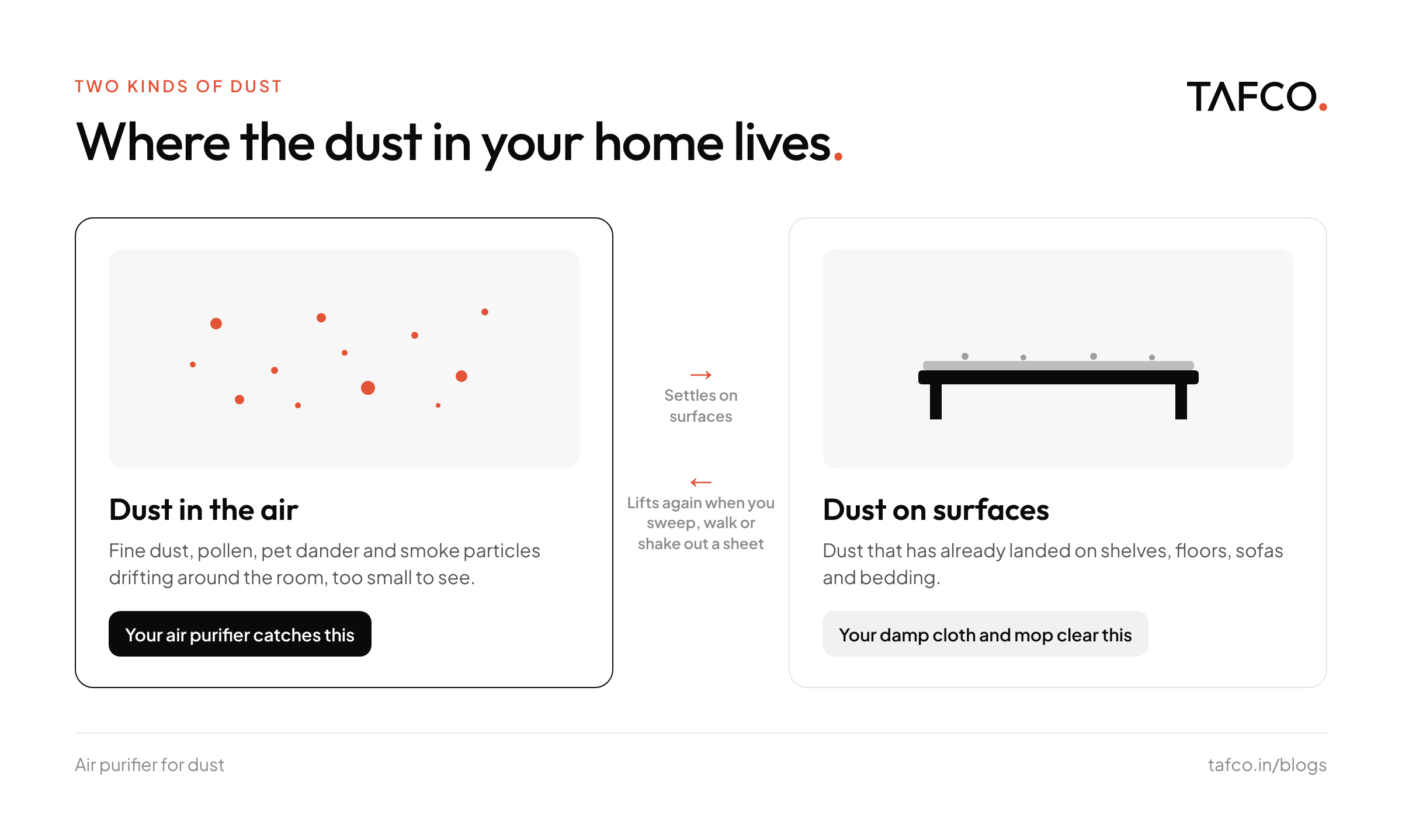
Yes, it removes the dust that's in the air. It pulls your room's air through its filters, traps the particles and sends clean air back out. What it can't do is lift dust off your shelves, sofa or floor. That dust has already landed, and only a cloth or a mop will move it. You'll still clean, but less often, because far less dust is left floating around to settle.
Why does dust come back so fast in Indian homes?
Because new dust keeps arriving and old dust keeps getting stirred up. Every open window lets in road dust and construction dust. Every pair of shoes brings in a little more. Inside, dust lifts off curtains, sofas, mattresses and carpets every time someone sits down, walks past or shakes out a bedsheet. The ceiling fan keeps it moving. A dry jhadu throws the finest dust straight back into the air while you sweep. So that grey film on your table starts in the air. That's the part an air purifier can deal with.
What is household dust made of?
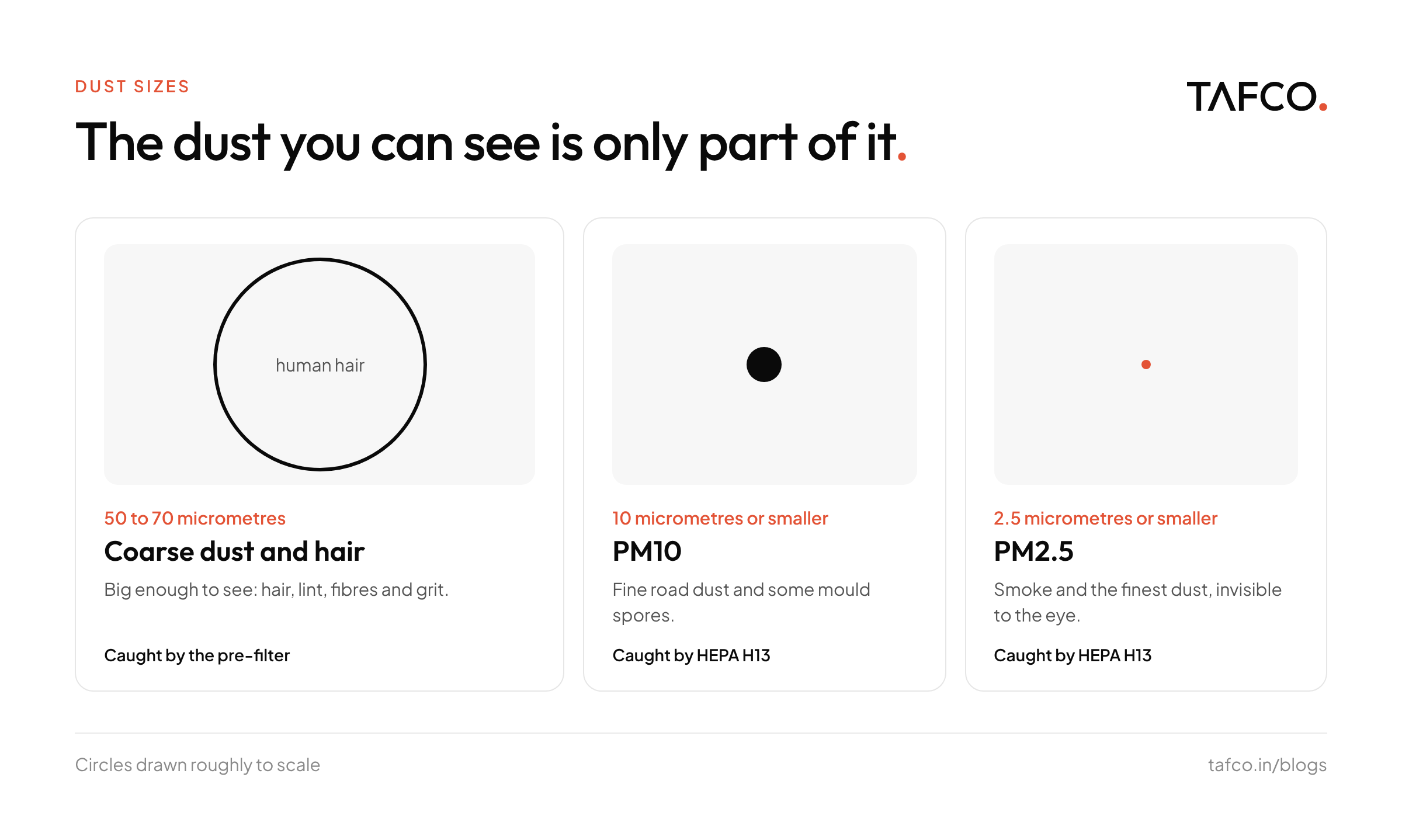
Household dust is a mix of tiny particles from outside and inside your home. A typical handful holds soil and road dust, fabric fibres, flakes of skin, hair, pet dander, pollen and fine particles from cooking smoke and agarbatti. Those pieces come in very different sizes:
- Coarse dust and hair: big enough to see. A human hair is about 50 to 70 micrometres wide.
- PM10: particles 10 micrometres or smaller, such as fine road dust and some mould spores.
- PM2.5: particles 2.5 micrometres or smaller, such as smoke and the finest dust. You can't see these at all.
India's national air quality index measures both PM10 and PM2.5, as set out in the CPCB National Air Quality Index report (opens in a new tab). An air purifier for dust has to deal with all three sizes, which is why its filters come in layers.
How does an air purifier catch dust?
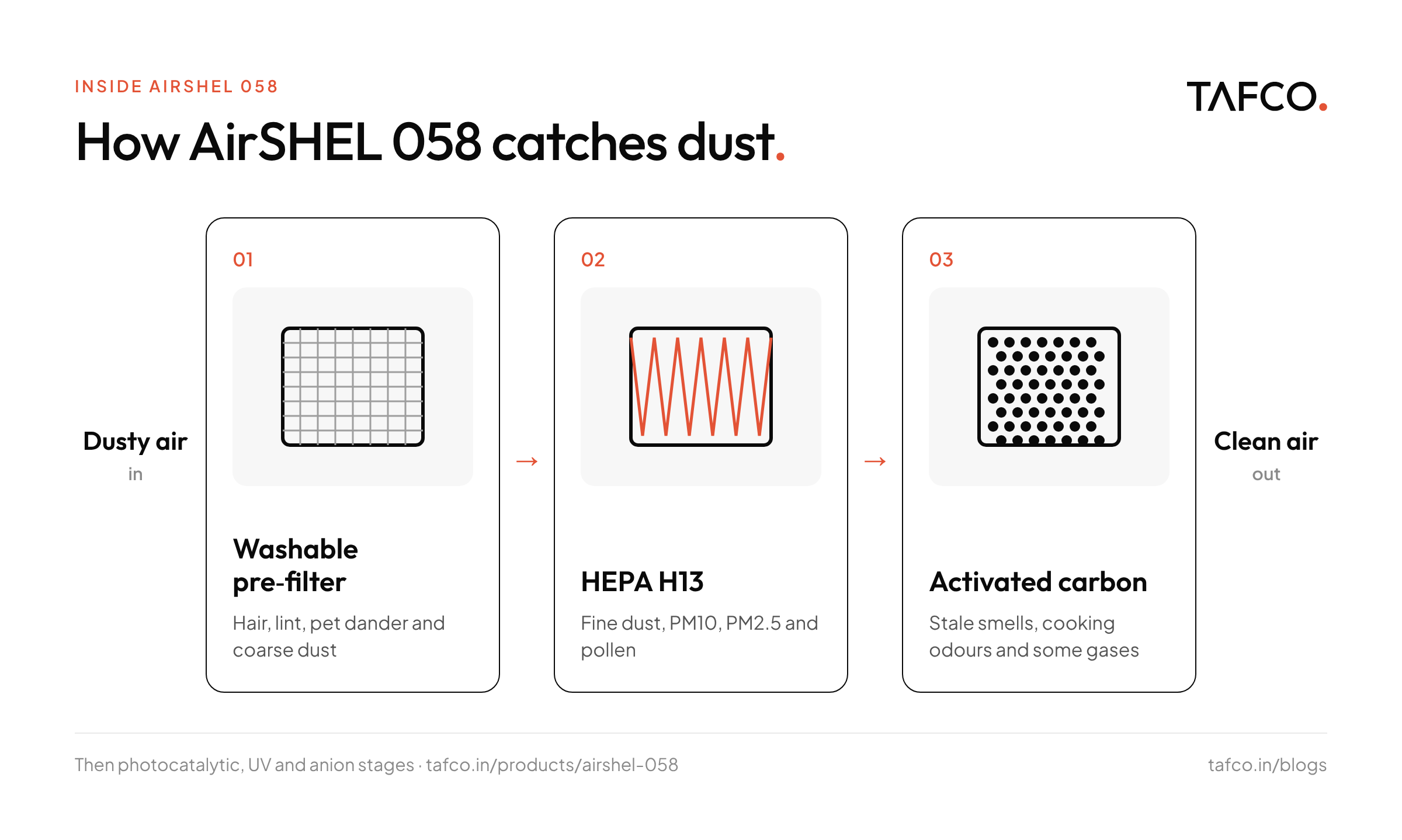
It pulls air through a stack of filters, and each layer catches a different size of dust.
- Pre-filter: catches the big stuff first, like hair, lint, pet fur and coarse dust. It protects the finer filter behind it.
- HEPA H13 filter: catches fine dust, PM10 and PM2.5. It's rated to capture at least 99.95% of these fine particles.
- Activated carbon filter: takes care of the stale smell a closed, dusty room can pick up, along with cooking smells and some gases.
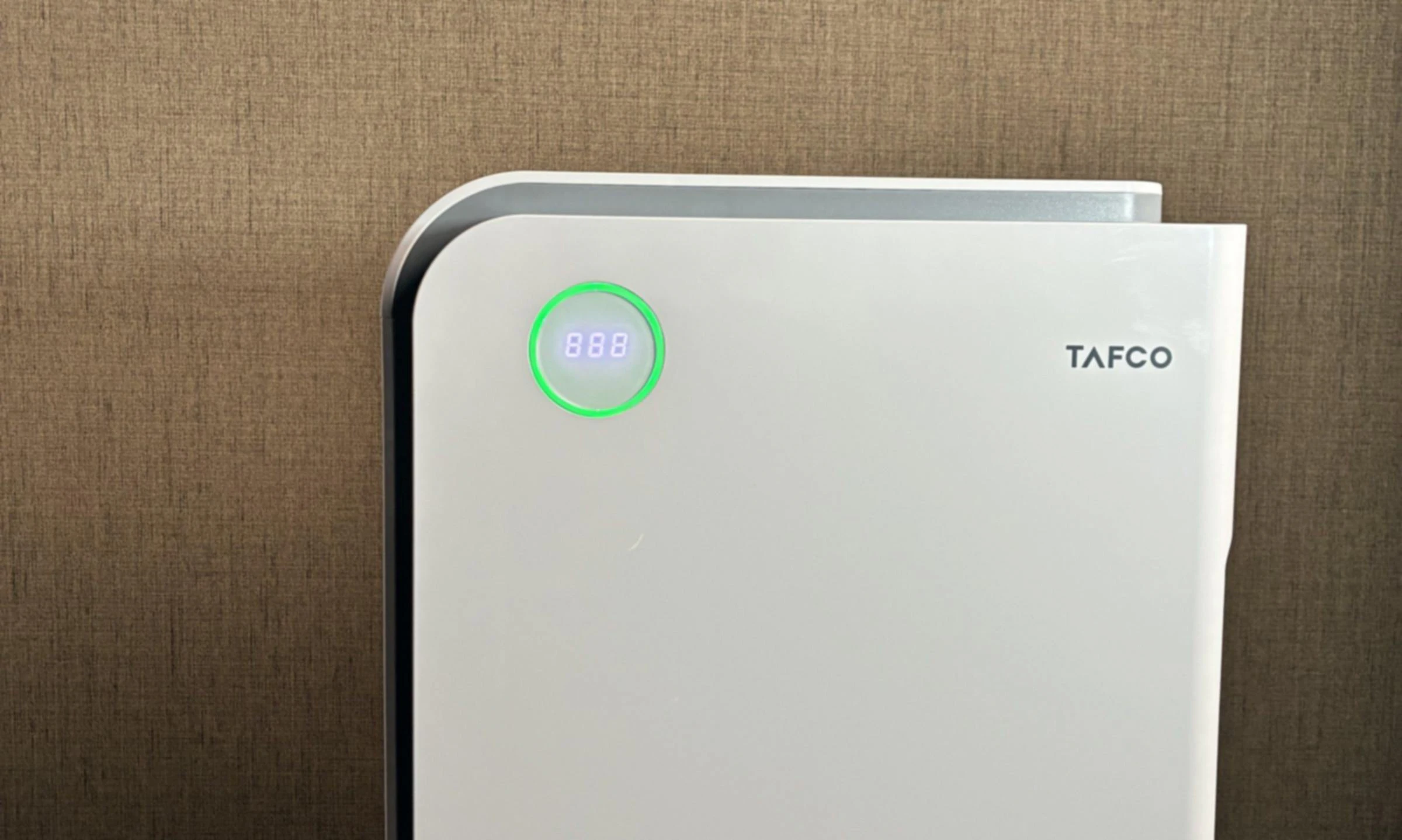
AirSHEL 058 uses all three, with a washable pre-filter in front. Its photocatalytic, UV and anion stages sit after these and help with other jobs. On dust, the pre-filter and HEPA H13 do the heavy lifting.
What should an air purifier for dust have?
Dusty homes are tough on purifiers. These six things make the difference between a machine that keeps up and one that clogs and gives up.
| Feature | Why it matters for dust |
|---|---|
| Washable pre-filter | Catches hair and coarse dust, and you can rinse it instead of replacing it |
| HEPA H13 filter | Traps the fine dust you breathe in and can't see |
| Enough CADR | Too little, and dust settles before the purifier can reach it |
| PM2.5 sensor with auto mode | Speeds up when you sweep or dust, then settles back down |
| Filter alert | Dust fills filters faster, so you need a clear sign when they're due |
| Silent mode and timers | You'll run it for hours, including at night |
CADR, or Clean Air Delivery Rate, is how much clean air a purifier puts out in an hour. AirSHEL 058 delivers 310 m³/h, enough to refresh a 300 sq ft room about 4 times every hour. To check your own room, use our CADR calculator (opens in a new tab). It shows your clean air requirement and how many AirSHEL 058 units your space needs.
How long does an air purifier take to clear dust?
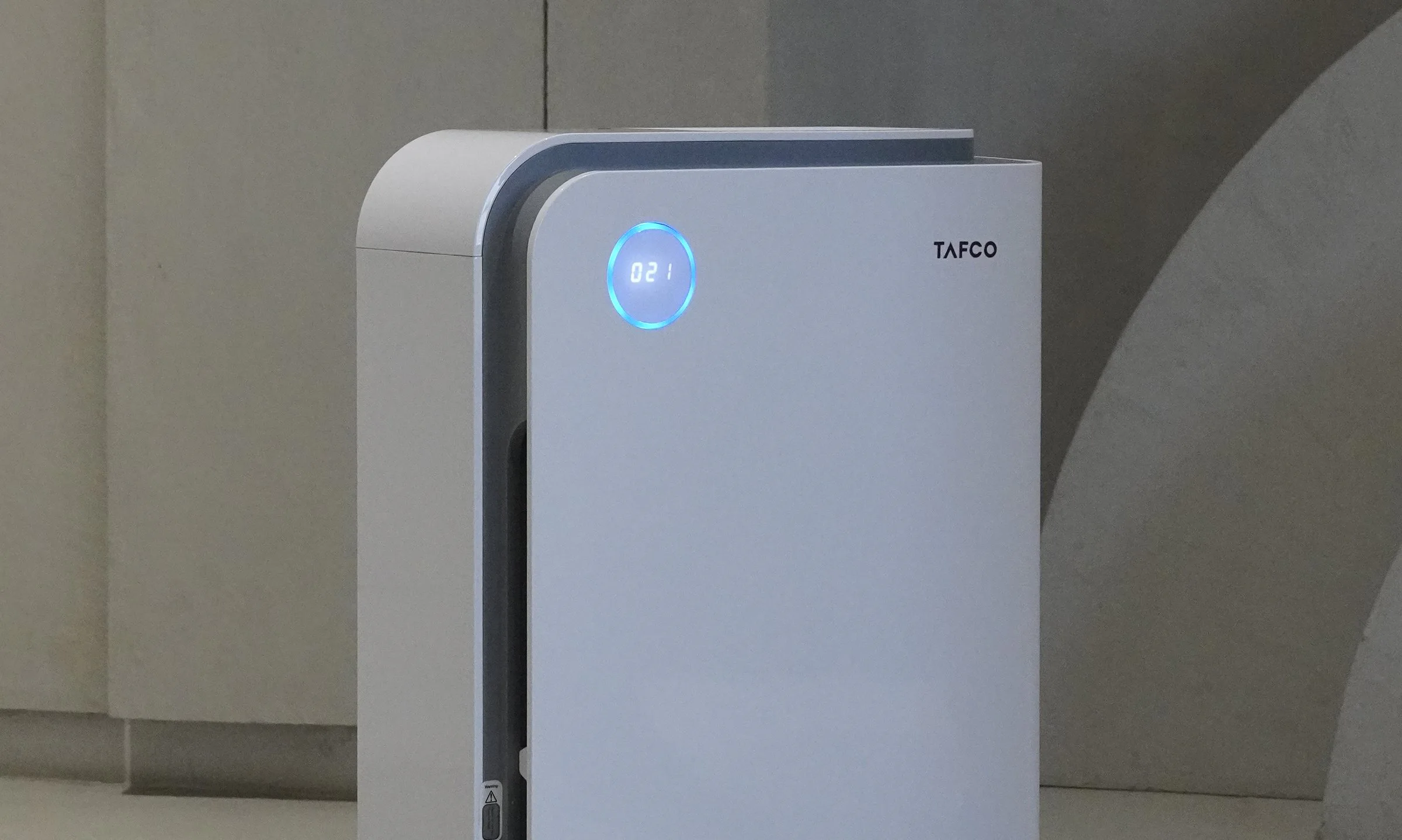
It depends on your room size and the purifier's CADR. At 4 air changes an hour, all the air in the room passes through the filters about once every 15 minutes. Most of the floating dust is caught within the first hour. The easiest way to see it is on a PM2.5 display. When we switch on an AirSHEL 058 at a new install, its PM2.5 sensor often reads 170 to 180 µg/m³, in rooms that look perfectly clean. Leave it running and you can watch that number come down.
Where should you place an air purifier for dust?
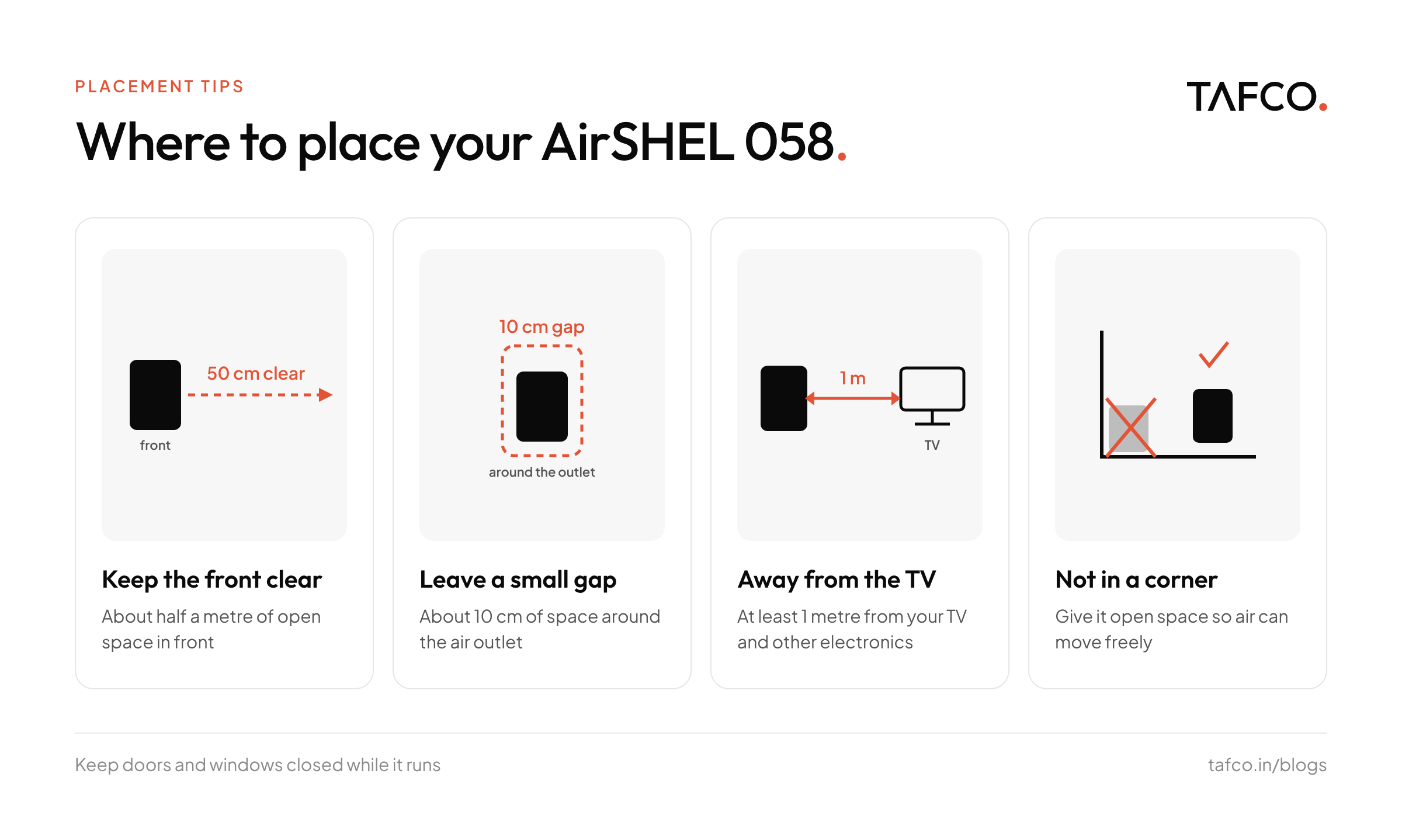
Put it in the room where you spend the most time, and keep doors and windows closed while it runs. In a dusty home, that's usually the bedroom or the living room that faces the road.
Keep the front clear, with about half a metre of open space Leave a small gap, about 10 cm, around the air outlet Keep it at least 1 metre away from your TV and other electronics Don't push it into a corner or behind the sofa, where the air can't reach it
How do you keep dust down at home?
An air purifier works best with a few small habits. None of them take long.
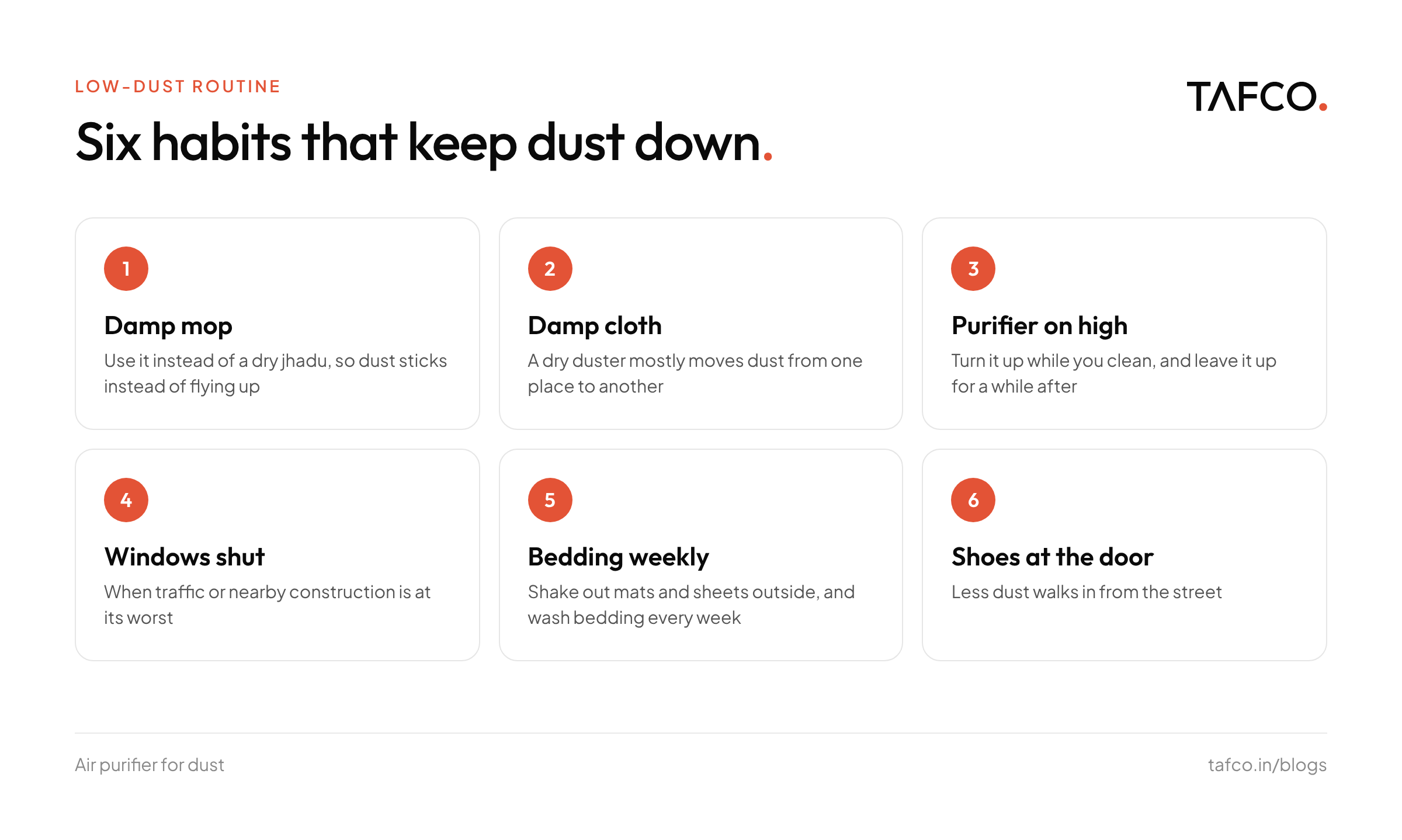
- Mop with a damp mop instead of sweeping with a dry jhadu, so the dust sticks instead of flying up.
- Wipe surfaces with a damp cloth. A dry duster mostly moves dust from one place to another.
- Turn up the purifier while you clean, and leave it on a higher speed for a while after.
- Keep windows shut when traffic or nearby construction is at its worst.
- Shake out mats and bedsheets outside, and wash bedding every week.
- Leave shoes at the door.
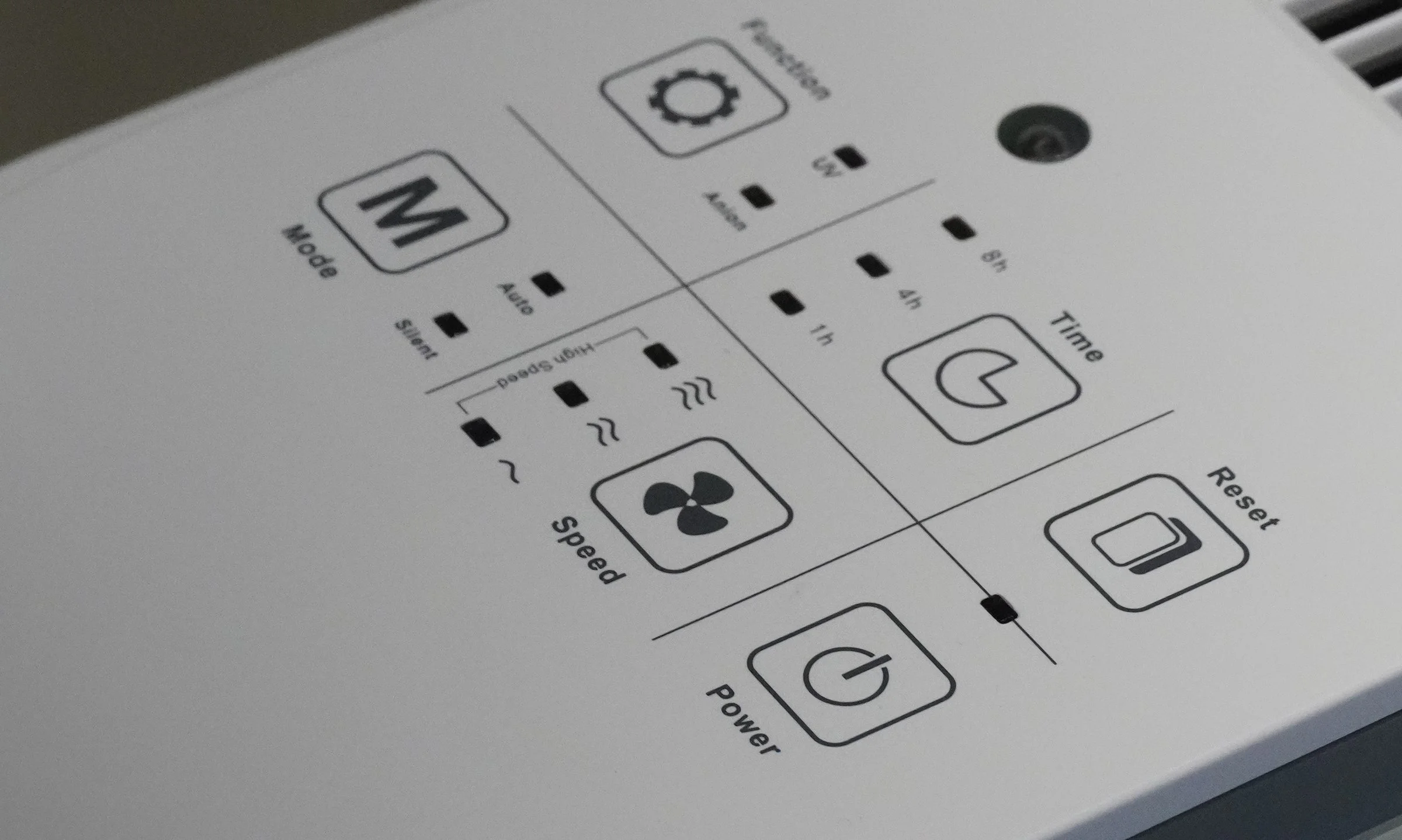
On AirSHEL 058, the speed button gives you three fan speeds, and Auto mode does the work for you by speeding up when the PM2.5 reading rises.
How do you look after the filters in a dusty home?
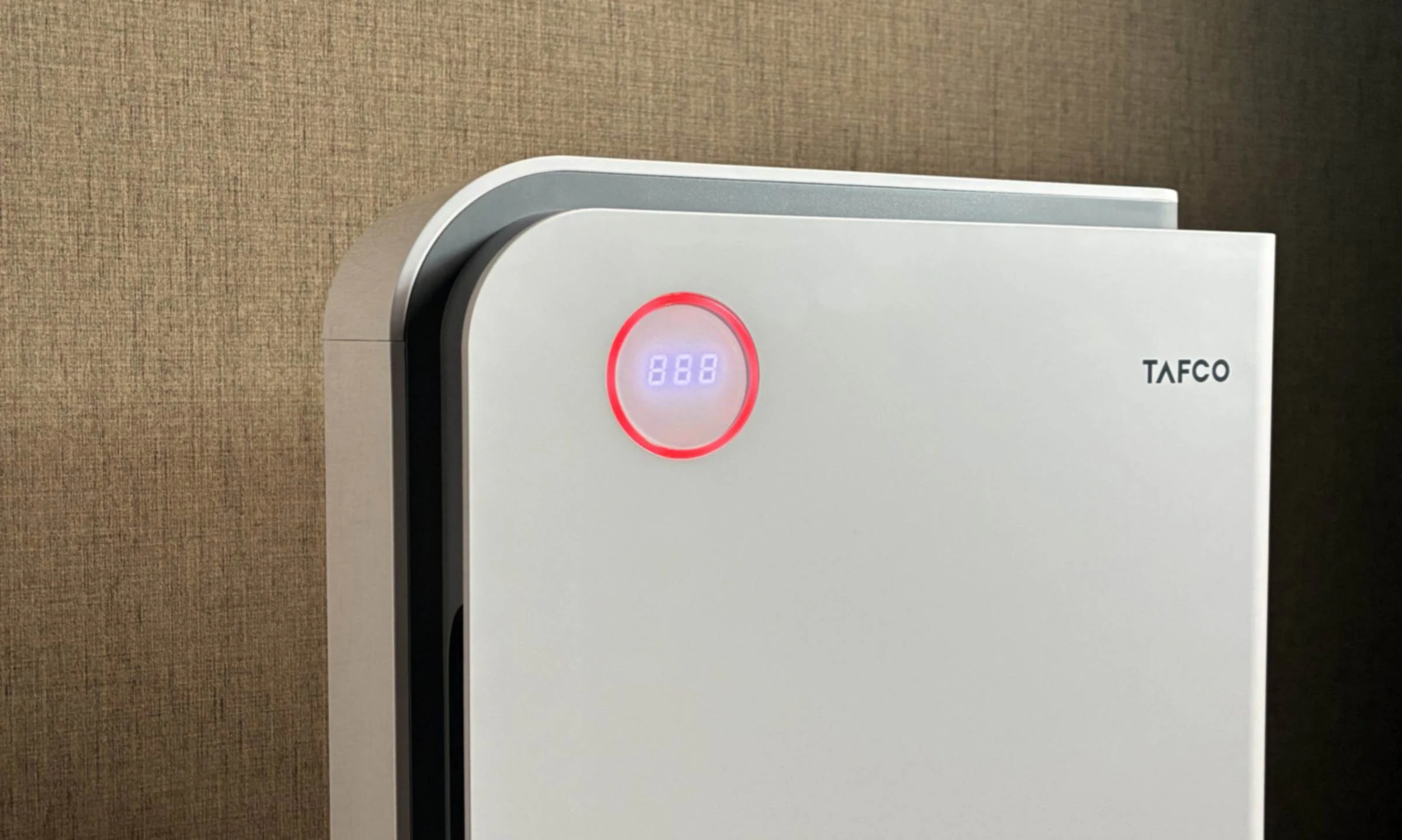
Dust is hard on filters, so check them more often than you would in a cleaner home. Pre-filter: take a look every couple of weeks. If it looks grey, rinse it with water, let it dry completely and put it back. HEPA and carbon filters: don't wash these. AirSHEL 058 tells you when they're due. When it's time for new filters, it shows a red light as soon as you switch it on, and replacement filters come straight from TAFCO.
Is AirSHEL 058 a good air purifier for dust?
For rooms up to about 300 sq ft, yes. It has the layers dust needs, a sensor that reacts when you sweep, and a red light that tells you when to change the filters.
| What dust needs | AirSHEL 058 |
|---|---|
| Pre-filter | Washable pre-filter for hair, lint, pet dander and coarse dust |
| Fine dust filter | HEPA H13 |
| Smell control | Activated carbon |
| Clean air delivery | 310 m³/h (180 CFM), refreshing a 300 sq ft room about 4 times an hour |
| Reacts to dust | Real-time PM2.5 sensor with a colour-changing display and auto mode |
| Speed control | 3 fan speeds, plus Auto and Silent modes |
| Filter alert | Red light at switch-on when filters need changing |
| Night use | 1, 4 and 8 hour timers, and a child lock |
| Warranty | 1 year |
| Price | ₹15,999 early-bird price incl. GST (MRP ₹24,999), with free shipping |
For a bigger hall or a whole flat, the CADR calculator (opens in a new tab) tells you how many units you need, or you can book a demo (opens in a new tab) to plan a setup for the whole space. TAFCO is an integrated indoor air quality brand for homes, offices, clinics, factories and cleanrooms. We work only on the air you breathe. See the AirSHEL 058 (opens in a new tab)
Choosing the right air purifier for dust
The right air purifier for dust catches what's floating before it settles, and keeps doing it week after week. Look for a washable pre-filter, a HEPA H13 filter, enough CADR for your room and a clear filter alert. For the bigger picture on choosing a purifier, read our guide to the best air purifier for home in India (opens in a new tab).
Frequently asked questions
Do air purifiers really remove dust?
Yes. An air purifier removes dust that's floating in the air by pulling it through a pre-filter and a HEPA H13 filter. It can't remove dust that has already settled on furniture or floors, so you still need to wipe and mop. With less dust in the air, you'll find yourself cleaning less often.
Will an air purifier stop dust settling on furniture?
It cuts down how much dust settles, but it can't stop it completely. New dust keeps coming in from outside and lifting off fabrics as people move around. Keep windows shut on dusty days, run the purifier in the room you use most, and wipe surfaces with a damp cloth.
Which filter is best for dust?
A washable pre-filter and a HEPA H13 filter together. The pre-filter catches hair, lint and coarse dust, and you can rinse it. The HEPA H13 filter catches fine dust and PM2.5, rated at no less than 99.95% of these particles. AirSHEL 058 uses both, plus an activated carbon filter for smells.
Can an air purifier help with dust allergies?
It can lower the dust, pollen and pet dander floating in the room you run it in. It isn't a treatment, though. If dust triggers allergies or asthma for you or someone at home, keep following your doctor's advice and use the purifier alongside it, ideally in the bedroom with doors and windows shut.
How long should I run an air purifier for dust?
Run it all day on auto mode in the room you use most, since dust keeps coming in. Turn it to a higher speed while you sweep, dust or make the beds, and for a while after. At night, Silent mode and a timer let it keep working while you sleep.
Sources
- Central Pollution Control Board, National Air Quality Index report, October 2014 (opens in a new tab)
- TAFCO, AirSHEL 058 (opens in a new tab) product page and FAQ
- TAFCO, CADR calculator (opens in a new tab)
- does air purifier remove dust
- best air purifier for dust
- air purifier for dust in home
- air purifier for dust
Written by Khushboo Soni
Head of Marketing
We are an integrated indoor air quality management company helping you understand air you breathe